
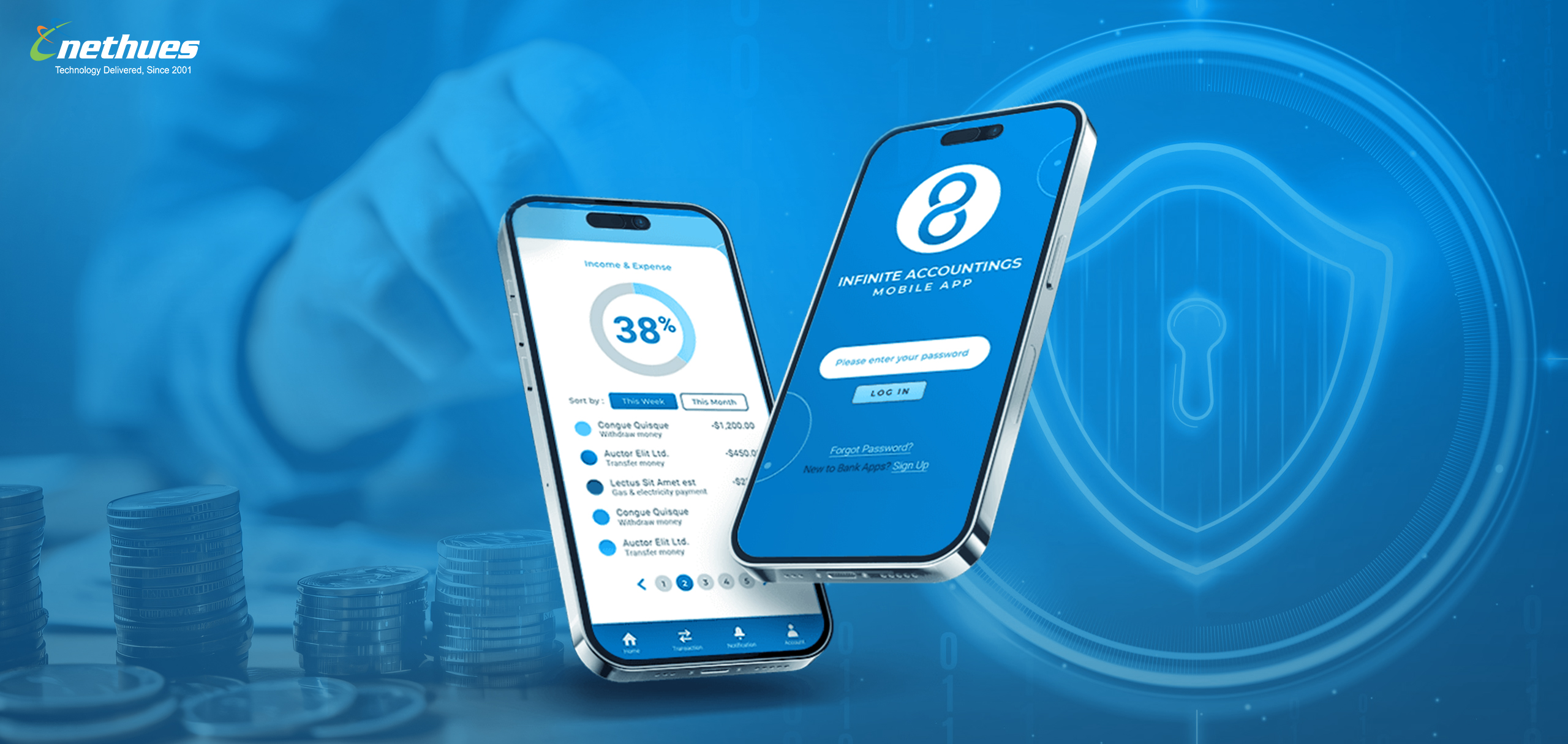
Are you planning to build and launch an MVP focused on cybersecurity? With the right MVP strategy, you can pave the way to build a product that boosts security and drives return on investment. It can help you validate core features quickly, reduce risks, and achieve faster time-to-market.
Launching your ideas as an MVP for a cyber safety app also helps to keep the app development cost under control. According to DataInsights Market, the MVP development industry is projected to grow at a strong 17.3% CAGR from 2024 to 2028.
This highlights the trend of launching ideas as minimum viable products. Complex and well-secured modern systems are often targeted by hackers to exploit sensitive data. Most technology visionaries believe there’s no such thing as “unhackable.”
Even platforms built on blockchain, like exchanges and wallets, have faced major breaches. A recent example is the Bybit hack in early 2025, where nearly $1.5B was stolen, reportedly by a state-sponsored group. Building an MVP for a cyber safety app helps you identify potential vulnerabilities and fix them with each new update.
How to Build a Cybersecurity MVP?
Step1- Understand Your Security Problem & Market Needs
Before writing any code, identify the exact cybersecurity problem your MVP will solve.
Is it:
- Detecting suspicious activity?
- Protecting user devices from phishing or malware?
- Monitoring identity breaches?
- Securing cloud data?
Research your competitors and study existing gaps to determine what users struggle with. Understanding the security pain points helps you define an MVP that offers real value instead of just another security tool.
Step2- Define Long-Term Vision & Security Goals
Clear long-term goals determine which features must go into the MVP now, and which can be added in later releases. Once you validate the problem, the next step is to outline your MVP development roadmap. Try to identify how the product will evolve after you launch the MVP. So, you must identify advanced features that can be added later.
For example, you can add complex functionalities like AI threat detection, zero-trust access, and SOC integration. Similarly, another important goal is to define ways to drive revenue. Popular modals involved are subscriptions, enterprise licensing, or add-on modules.
Step3- Map the User Journey for Security Workflows
When building an MVP for a cyber safety app, you must focus on keeping the product simple, fast, and intuitive. A complex interface can affect user experiences. Consequently, they might miss important alerts or fail to use the key features.
Map the journey for your primary users:
- Who are they? (Home users, SMB owners, IT admins, SOC analysts)
- What actions do they need to take? (Scan device, monitor threats, manage passwords, view analytics, enable 2FA)
- Where can friction occur (Too many steps? Overwhelming screens? Delayed alerts?)
Addressing the answers to the above-listed factors helps you design and build a successful MVP.
Step4- Choose the Core Features of Your Cybersecurity MVP
An MVP should launch with only the essential security capabilities. The goal is not to build a complete cybersecurity platform at the first launch. Rather, it’s to validate the core value. Common MVP features for a cyber-safety app include user authentication (with MFA/2FA), threat detection or monitoring, and data encryption.
Complex functionalities could pave the way to include device or activity scanning, a dashboard with actionable alerts, or managing data breaches. Try focusing only on the essentials. You can add advanced features like AI-powered detection and ransomware defense after validating the MVP.
Step5- Build, Launch, Test, and Improve
After planning the MVP, partner with a reliable development team experienced in cybersecurity. The build phase includes architecture planning and backend & security layer development. You also need to cater to UI/UX design, integrate core features, and run security tests and vulnerability scans. An MVP development company can help you build and launch your ideas smoothly.
Once the MVP is launched, collect feedback from early adopters like security teams, tech-savvy users, and beta testers. These insights can help you identify vulnerabilities and improve MVP accuracy. MVP validation confirms whether the product solves the intended security problem and has real market potential before you invest further.
Key Features Your MVP Cybersecurity App Can Cater to
Your cybersecurity MVP can be designed to address one specific threat or a combination of several. Depending on your product vision, the MVP may focus on preventing:
- Denial-of-Service (DoS) attack
- Malware
- Ransomware
- Spyware
- Spoofing
- Phishing
How to Estimate the Cost and Timeline for Building a Cybersecurity MVP?
The cost of developing a cybersecurity MVP depends on several factors. It is significantly influenced by the feature set, level of security required, tech stack, compliance needs, and the experience of your development team. For example, hiring experienced mobile app developers with deep expertise in the cybersecurity industry paves the way to smoothly launch the ideas.
Cybersecurity products often require additional security layers, testing cycles, and threat-mitigation features. Below is a general outline to help you understand how different MVP approaches typically compare:
| MVP Type | Estimated Timeline | Project Type |
| Prototype or Low-code MVP | 2–4 weeks | Best for fast validation and early demos |
| Basic Native MVP | 4–8 weeks | Suitable for apps requiring device-level security and smoother performance |
| Full Cross-platform MVP | 8–12 weeks | Ideal for scalable cybersecurity tools targeting wider user bases |
A low-code prototype works well for quick concept testing. This is especially true if you want to validate core security ideas before building the actual detection or monitoring engine. Native apps support stronger device integrations and can offer better control over security workflows.
Cross-platform builds help you reach multiple audiences without duplicating development work. Hire Flutter developers to launch cross-platform MVP solutions that are fast, secure, and ready to grow with your product vision.
The overall cost is also influenced by the supporting services you may need during cybersecurity MVP development. These may include advanced encryption implementation and compliance considerations (GDPR, SOC 2, HIPAA, etc.).
Cybersecurity MVPs often require additional testing to ensure the product can reliably detect or prevent threats under real-world conditions. This may include penetration testing, secure code reviews, and regular vulnerability assessments. Investigating such factors early helps you plan your roadmap and allocate resources wisely.
Conclusion
Building an MVP for a cyber safety app is one of the smartest ways to bring a security product to market. By focusing on essential features, validating your idea with real users, you can reduce vulnerabilities and increase long-term success.